Inspirations: Oil Paintings of Boats from Spanish Fishing Harbors
January 10, 2026
A Hard Life at Sea: Painting Weathered Boats
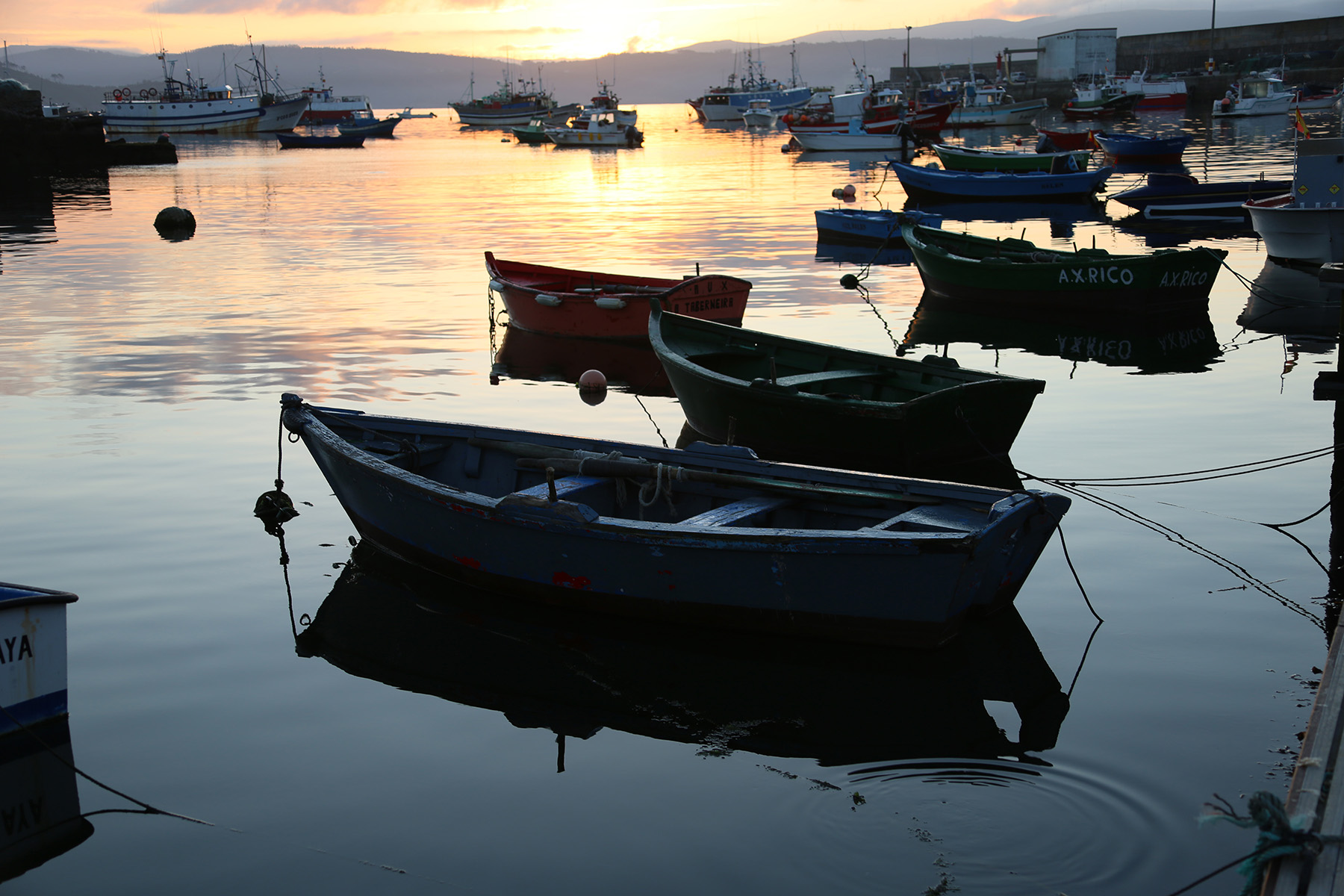
A seawall is a barrier built to protect a shoreline or harbor from the action of powerful waves. I love to paint the small wooden rowboats found in these harbors. Most are skiffs or dinghies used to transport sailors or crews between the shore and larger fishing boats moored in deeper water.
My favorite subjects for oil paintings are humble, simple, and evocative. Their construction and decoration is practical and straightforward - not ostentatious. And they do not look foreign, although they are drawn from fishing harbors in Spain, Italy, France, Sicily, Corsica, Croatia, Greece, and Malta, as well as here in North America.
I especially appreciate badly worn, weathered, often broken, and crudely repaired boats. Their multiple repairs and repaints often seem charmingly improvised rather than carefully considered and executed. Roughly used and badly tended boats invite us to contemplate the effects of time and nature. We can read the effects of a hard life on the sea in their multiple layers of chipped and sun-bleached paint, worn edges, scraped sides, and broken trim and oarlocks. We can trace the hand of man in their creation, use, and repair.

Santiago de Compostela: Fishing Villages and Harbors
Although I have found the rowboats I love to paint (dinghies, dories, tenders, and skiffs) in harbors all over the U.S. and Europe, my favorites come from harbors on the Atlantic coast of northwestern Spain.
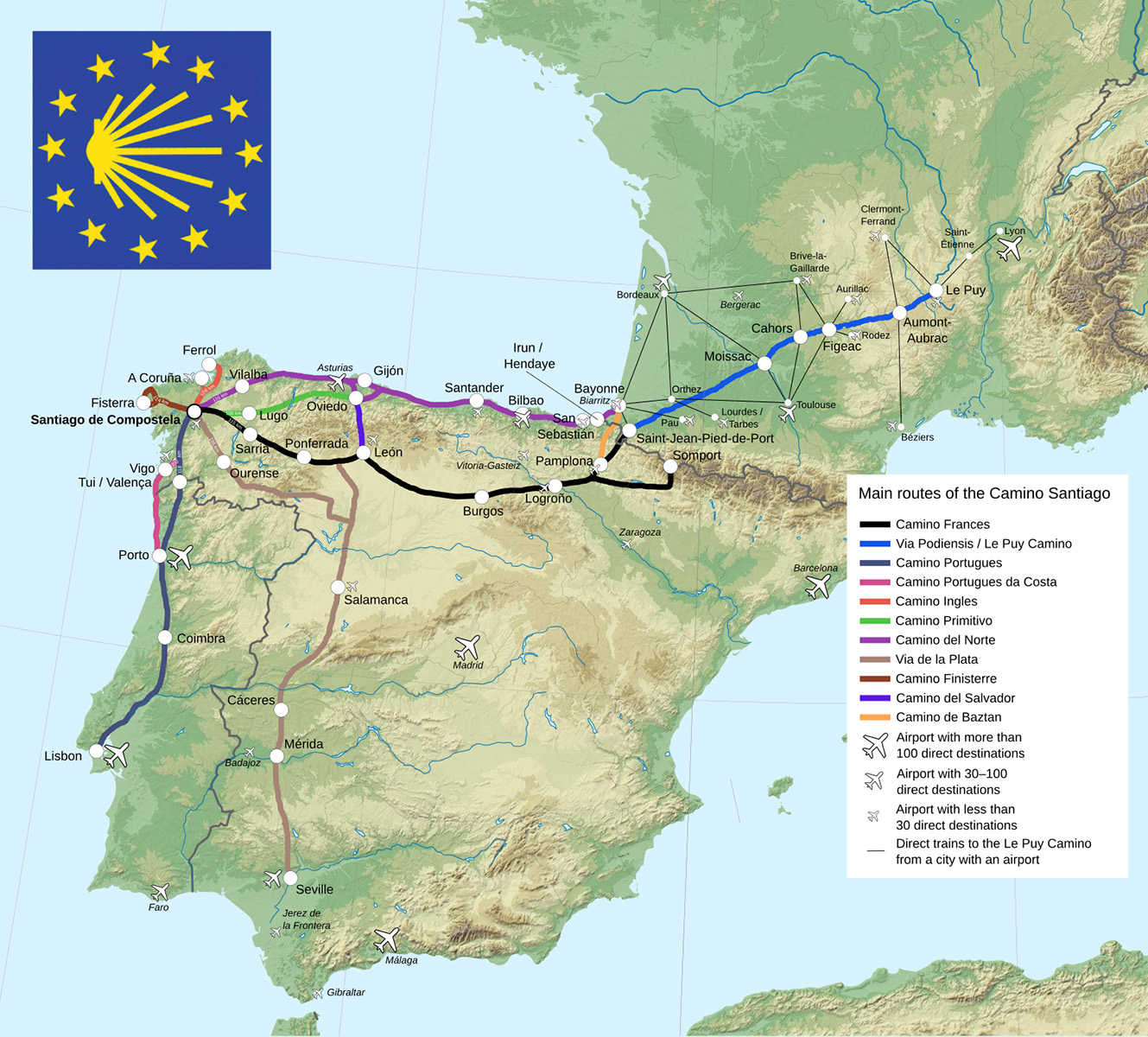
My wife and I spend several weeks there each spring visiting the many Spanish fishing villages near Santiago de Compostela.* Santiago is the destination of the famous pilgrimage route – the Road or Camino to Santiago - or simply "The Way." The Camino was just one branch of a network of pilgrimage routes to Santiago that developed throughout Europe during the early Middle Ages. Christian pilgrims would walk for weeks or even months to visit the tomb of Saint James the Elder in the crypt beneath the Cathedral. According to legend, the body of Saint James (in a stone boat?) had miraculously washed up on the shore near the city of Santiago.
James had preached the Gospel on the Iberian Peninsula but had later been martyred by decapitation in Jerusalem. The decision to inter the body of the saint beneath the cathedral was an outrageously successful marketing ploy. Christians came by the thousands. At the time, the only other similarly important pilgrimage sites (the visitation of which could ease the pilgrim's entry into heaven) were in Rome and Jerusalem. Both were much farther away from Central Europe and their routes were much more dangerous.

*Santiago de Compostela translates as "Saint James (Iago is James in Galician) of the Field of Stars." The "Field of Stars" refers to the Milky Way, which seems to sweep west across the night sky of northern Spain toward the tomb of Saint James the Elder, one of the twelve apostles of Christ.
The Coast of Death: Costa da Morte Spain
Walking medieval pilgrimage routes to Santiago de Compostela is still very popular today – especially its most famous branch, the Camino de Santiago or "The Way," which begins at St. Jean Pied de Port in the southwest corner of France. This route requires about 30 to 35 days of walking at 15 miles a day.
When my wife and I spend time in Santiago each spring, we enjoy meeting and speaking with pilgrims in Santiago, who often explain that they have walked for spiritual rather than religious reasons. Although often bandaged and limping, most pilgrims seem to have benefited from the weeks of quiet self-reflection and are amazingly open, honest, and friendly. They are certainly proud of their accomplishment and in the mood to celebrate. In the evenings my wife and I are happy to share in their celebrations over tapas or seafood and white wine. During the days, my wife polishes her Spanish in intensive language classes.
Each day I explore the many fishing harbors along the Atlantic coast nearby, looking for the simple wooden rowboats and skiffs showing the effects of their harsh, unforgiving life on the sea. Because this coast was particularly treacherous, it came to be known as La Costa da Morte – the "Coast of Death." Certain villages along the coast even developed the reputation for building fires along the coast to lure ships to ruin on the rocks where their cargoes could be claimed as salvage.
The End of the Earth: Finisterre Harbor
My favorite harbor for finding these old, weathered boats is on the Costa da Morte in northwestern Spain at Finisterre ("End of the Earth"). This large and deep harbor is on a small peninsula or cape extending west into the Atlantic near Santiago de Compostela.
It was called Finisterre (or Fisterra in Galician) because it was thought to have been the actual end of the Earth during the Middle Ages, before the discovery of the New World. (Later it was determined that the actual farthermost western extension of Europe was in Portugal). A walk to Finisterre was an extension to the famous Camino of Santiago pilgrimage route. After visiting the tomb of Saint James the Elder (Santiago) in the crypt beneath the Cathedral in the city of Santiago de Compostela, pilgrims would often walk three or four days farther to Finisterre.
On a shore there, they would traditionally burn clothes worn during their weeks-long pilgrimage, and then they would put on new clothes as a symbol of spiritual rebirth. Many of the skiffs and dinghies in my oil paintings are from Finisterre and smaller harbors nearby. These works are available to collectors interested in maritime art.